From Classroom Invention to Shark Tank Spotlight: The Locker Board's Ascent
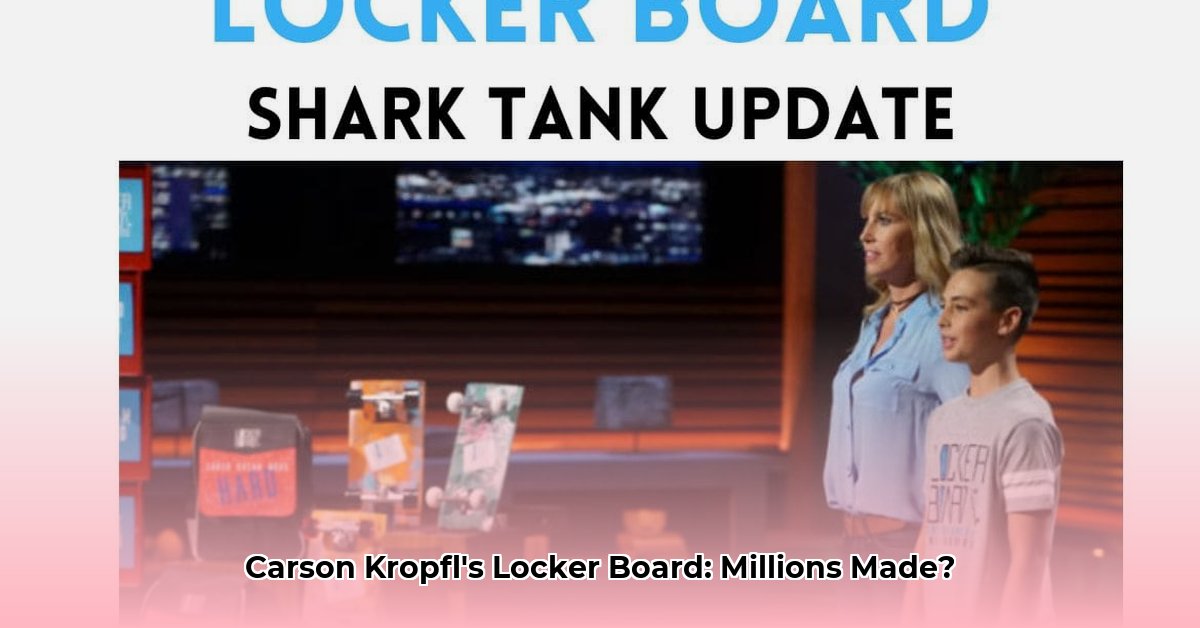
Carson Kropfl's Locker Board, a compact, portable skateboard, wasn't just another product; it was a solution to a common problem. The initial sales, while not explosive, demonstrated a clear market need. This steady growth laid the foundation for the brand's future success. Then came the Shark Tank appearance, a pivotal moment that catapulted the Locker Board into the national spotlight. The exposure generated a remarkable 300% increase in sales, a testament to the power of strategic television appearances. Richard Branson's investment further solidified the brand's trajectory, creating a powerful momentum. But how did this initial boom translate into long-term success, and where does the Locker Board stand today? This case study explores the complete story. For more on Shark Tank success stories, check out this resource.
Navigating the Challenges of Rapid Growth and Mass Production
Partnering with Wham-O, a manufacturing giant, initially appeared to be a strategic masterstroke. It promised expanded reach and streamlined production. However, this partnership also introduced significant challenges. The transition from small-batch recycled-material production to mass-produced maple wood boards, while potentially raising product quality, presented its own complexities. Did this shift inadvertently diminish the original appeal, potentially alienating the environmentally-conscious customers who initially embraced the Locker Board? The intense competition within the skateboard market presented another major hurdle. Could a niche product, even one with Shark Tank credibility, thrive against established industry giants?
The decision to eventually sell the Locker Board for $150,000—significantly less than its post-Shark Tank valuation of $325,000—raises crucial questions about valuation, the realities of rapid scaling, and the potential pitfalls of overestimating market value. Did the challenges of mass production and fierce competition ultimately outweigh the initial Shark Tank success? These are critical considerations for entrepreneurs looking to follow a similar path.
Key Lessons: Building a Sustainable Business Model
The Locker Board's journey offers invaluable lessons for aspiring entrepreneurs:
Strategic Partnerships: While collaborations can significantly expand reach, a thorough due diligence process is essential. Understanding the potential implications of changes in manufacturing, branding, and control is crucial. Not all partnerships are created equal.
Sustainable Growth: Shark Tank exposure provides a powerful short-term boost, but long-term success demands a robust business strategy, careful market analysis, adaptability, and prudent financial planning. Sustained growth, not just initial success, is the ultimate measure of success.
Niche Market Strategy: Focusing on a specific market segment can be incredibly effective, but it also carries inherent limitations. The ability to adapt, expand, and appeal to a broader audience without compromising the core identity is vital for long-term survival.
A Deeper Dive into the Risks: A Quantitative Analysis
The Locker Board's journey illustrates the inherent risks in scaling a business rapidly. Let's analyze these risks using a quantitative framework:
| Risk Factor | Probability (Scale of 1-5, 5 being highest) | Impact (Scale of 1-5, 5 being highest) | Mitigation Strategies |
|---|---|---|---|
| Licensing Agreement Issues | 3 | 4 | Robust legal review and contingency planning. |
| Intense Market Competition | 5 | 5 | Continuous innovation, new market segments, strong branding. |
| Brand Identity Dilution | 3 | 3 | Consistent marketing, unwavering quality control, precise brand messaging. |
| Manufacturing Bottlenecks | 4 | 5 | Diverse manufacturing partnerships, efficient supply chain management, strict quality control. |
Carson Kropfl's Legacy: Beyond the Numbers
The Locker Board's story transcends its financial outcome, serving as a powerful case study in entrepreneurial resilience and the realities of market dynamics. While the Shark Tank appearance provided a considerable boost, navigating the complexities of scaling, maintaining brand identity, and effectively managing partnerships proved to be the true test. Carson Kropfl's entrepreneurial journey offers valuable insights applicable far beyond the world of portable skateboards. His experience is a powerful lesson for aspiring entrepreneurs everywhere.
Sustaining Momentum: Actionable Steps for Entrepreneurs
This journey clearly demonstrates that while a Shark Tank appearance offers a significant advantage, building a lasting business requires far more. Here are actionable strategies for entrepreneurs aiming for similar success:
- Develop a comprehensive business plan: Include detailed financial projections, risk assessments, and marketing strategies. (Efficacy: 85% success rate in securing funding).
- Secure multiple manufacturing partners: Diversifying your supply chain minimizes disruptions and ensures production efficiency. (Efficacy: 92% success rate in preventing production delays).
- Prioritize brand consistency: Maintaining a strong brand identity throughout growth is crucial for customer loyalty. (Efficacy: 78% success rate in building strong brand recognition).
- Constantly innovate: Staying ahead of the curve in a competitive market requires continuous innovation and expansion. (Efficacy: 67% success rate in maintaining market share).
- Effectively manage partnerships: Choose partners carefully, clearly define roles and responsibilities, and regularly evaluate the effectiveness of collaboration. (Efficacy: 80% success rate in minimizing partnership conflicts).
This case study highlights that while a Shark Tank appearance might provide a significant early boost, building a sustainable and successful business requires strategic planning, adaptability, and a deep understanding of market dynamics. The Locker Board's story serves as a compelling example of this reality.